Household Hazardous Waste
Household Hazardous Waste Collection Events
SAVE THE DATE! ~ Exeter Area HHW Collection
When: Saturday October 3, 2026
Where: Exeter Public Works Garage
Participating Towns: East Kingston, Epping, Exeter, Greenland, Newfields, Seabrook, South Hampton, Stratham
Cost: $15 per vehicle (covers up to 10 gallons or 20 pounds of waste)
Pre-Registration is REQUIRED! Details and registration information will be posted this summer.
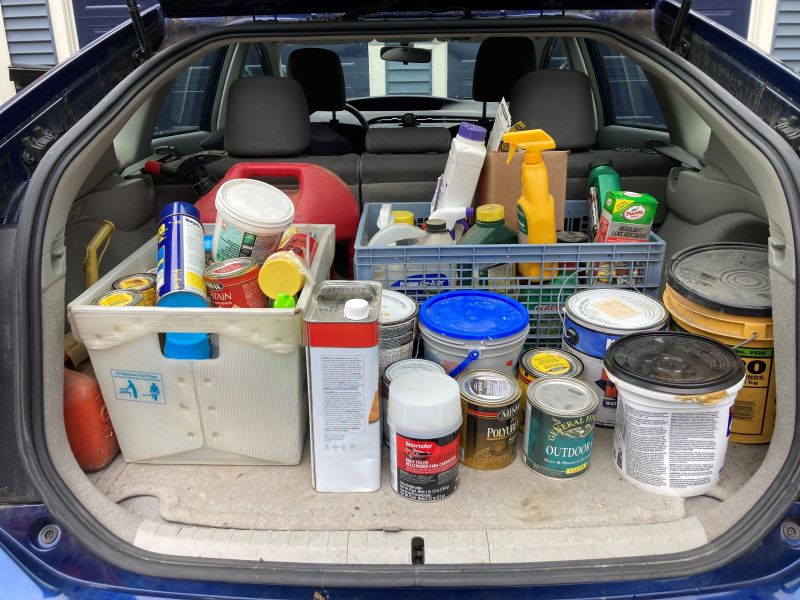
What is Household Hazardous Waste (HHW)?
Household Hazardous Waste or HHW are products that contain corrosive, flammable, toxic, or reactive ingredients. HHW cannot be disposed of in the regular trash and must be brought to a designated HHW collection event. When HHW is improperly disposed of it can pollute water, threaten human health, and harm wildlife.
Accepted Items
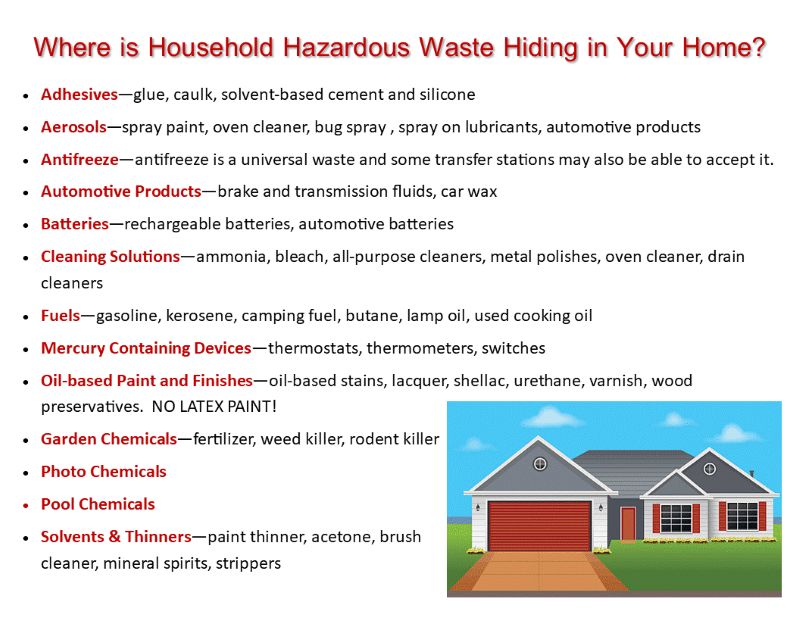
Prohibited Items
For more information about how to dispose of various household products, visit Managing My Waste | NH Department of Environmental Services.
Latex Paint -- is not hazardous and can be put in your regular trash once it is dried out.
Fluorescent Bulbs -- can be disposed of at your local transfer station or at any participating store. Click here for details.
Prescription Medication -- can be brought to your nearest Police Department Drop Box. Here’s a list of designated locations across the state: https://www.dhhs.nh.gov/sites/g/files/ehbemt476/files/documents/2021-11/bdas-drop-box-locations.pdf.
Syringes -- for information about disposing of needles in NH, visit: https://www.des.nh.gov/sites/g/files/ehbemt341/files/documents/sw-31.pdf
Asbestos -- residents should work with a licensed asbestos abatement contractor. Find licensed contractors and learn more from the NH Department of Environmental Services Asbestos Management webpage.
Carbon Monoxide Detectors -- most carbon monoxide detectors do not contain radioactive material and can be recycled with other electronics.
Electronics -- contact your local transfer station about how to recycle TVs, computers, monitors, tablets, and other electronics. Aurum Recovery, located in Goffstown, NH also collects electronics.
Empty Containers -- empty bottles, cans, and containers can go in the trash. Pressurized tanks such as propane tanks should be brought to a recycler.
Explosives & Shock Sensitive Materials -- Call 911 immediately if you realize that you have explosive chemicals in your home. Do not attempt to move or transport them. They can explode simply from being handled.
Fire Extinguishers -- visit Fire Extinguishers | NH Department of Environmental Services for more information.
Freon Appliances -- contact your local transfer station. Aurum Recovery accepts number of small appliances, including refrigerators, air conditioners, and dehumidifiers. NHSaves hosts seasonal turn-in events.
Marine Flares -- are classified as an explosive. Contact your local police or fire department.
Propane Tanks & Compressed Gas Cylinders -- contact your local transfer station.
Radioactive Compounds -- contact the manufacturer.
Smoke Detectors -- ionizing smoke detectors contain radioactive material. They can be returned to the manufacturer (Smoke Detector Manufacturer List) or mailed to a recycler (Curie Environmental).
Vapes -- disposable vapes contain both batteries and nicotine so they fall under multiple federal regulations. If the battery and the nicotine cannot be separated then they cannot be accepted at a HHW collection.
Creosote -- contact your local transfer station.
HHW Feasibility Study
Most residents in the Rockingham Planning Commission region only have access to one single-day HHW collection event per year. Furthermore, all HHW collections in the region are seasonal, providing no opportunities to dispose of HHW from late fall through spring. This infrequent and seasonal schedule means that residents often do not have a way to properly dispose of their HHW in a timely manner. It is particularly problematic when moving or cleaning out a home after a loved one has passed away. The limited and infrequent nature of HHW collections in the RPC region also increases the likelihood that residents will improperly dispose of their HHW, which can be harmful to human health, water quality, and wildlife.
The goal of this project is to determine which methods of HHW collection are feasible in the RPC region to provide residents with more frequent and convenient opportunities to properly dispose of their HHW. Specifically, this study examines the feasibility of adding single-day collection events, establishing a permanent HHW collection facility, and implementing a curbside HHW collection program.
Work on the HHW Feasibility Study began in 2024 and is ongoing. As documents are finalized or opportunities for public input become available they will be posted here.
HHW Feasibility Study--Full Report
HHW Feasibility Study--Executive Summary
HHW Feasibility Study--Presentation
Fact Sheet--2024 HHW Facts & Figures
Fact Sheet--HHW Collection Options
Tell Us What You Think!
Do you currently attend HHW collections in your community? If not, what keeps you from participating? Would you like additional opportunities to dispose of your HHW? Would more single-day collection events be beneficial? Would you like to have access to a year-round, permanent HHW collection facility? Would curbside HHW collection be helpful to you? To provide input or ask questions, please contact Jill Longval at jlongval@therpc.org.

